
Step Slider Block
The Step Slider Template defines the HTML structure and content displayed within the Gutenberg editor for the Step Slider Block. It is responsible for displaying a heading and a slider of steps, each with an image, a heading, and a description.
Content Editor Fields
Heading
- Description: The main heading text displayed above the step slider.
- Usage: Use this field to provide a clear title for the section.
- Optional: If no heading is provided, this element will not be displayed.
Steps
- Description: A list of steps to be displayed in the slider. Each step can have an image, a heading, and a description.
- Usage: Use this field to add and manage the steps in the slider.
- Mandatory: This field is mandatory. If no steps are added, the block will not display anything.
Example Usage:
Steps:
- Add the block: Insert the Step Slider Block into your page or post.
- Fill the fields:
- In the block settings, fill the "Heading" field.
- In the block settings, add the steps in the "Steps" field. For each step, you can add an image, a heading, and a description.
- Save the Block: Your Step Slider block is now ready for display!
Result:
When properly configured, the Step Slider Block will render a section with a heading and a slider of steps. Each step will display its image, heading, and description. The slider will have a navigation with thumbnails and arrows.
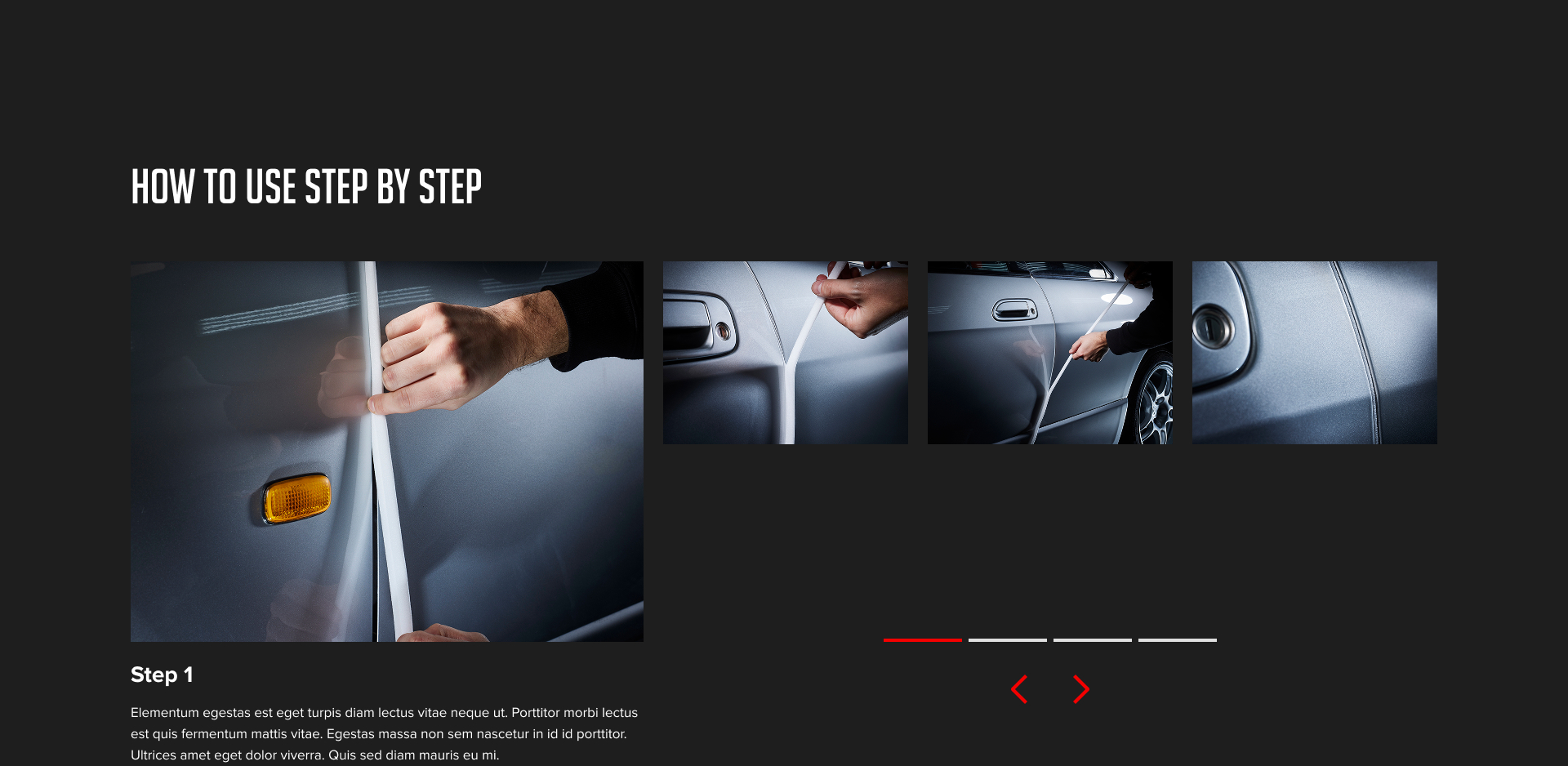
Preview in the editor (body):
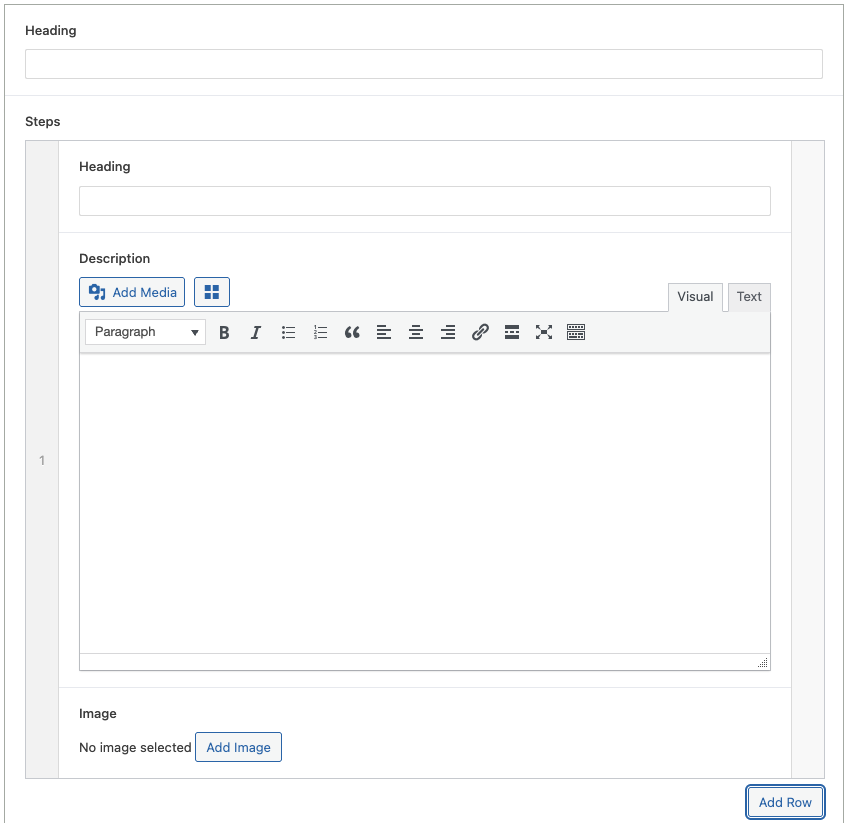
Customization:
You can customize the Step Slider Block display in the following ways:
- Content Customization: Change the heading text and the steps details directly within the block settings.
Benefits:
- Clear Structure: The template provides a simple and organized HTML structure.
- Dynamic Content: The template allows for dynamic content to be inserted.
- Easy to Use: It is simple to configure for the end user.
- Slider: The steps are displayed in a slider.
- Multiple steps: You can add multiple steps.
- Navigation: The slider has a navigation.