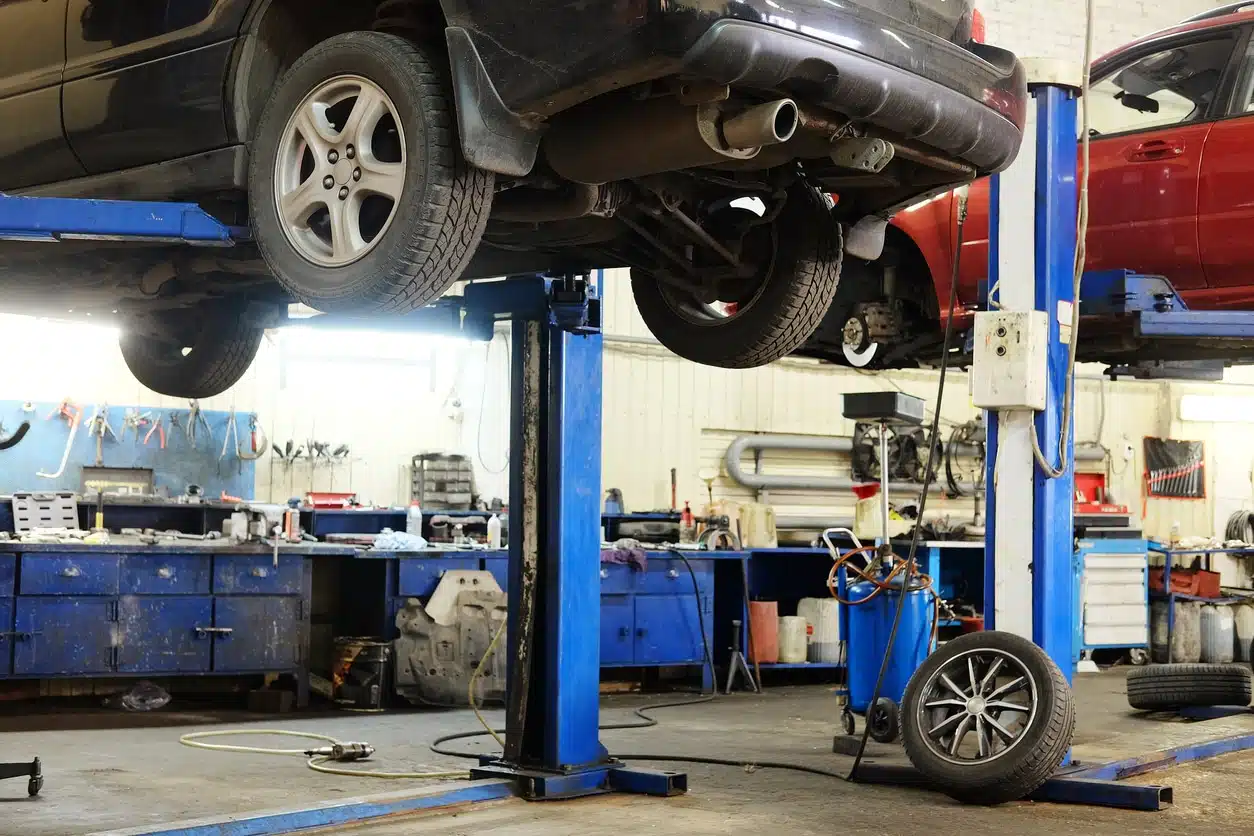
Running a successful auto body shop requires more than just technical skill and high-quality products; it demands a commitment to the safety of everyone on the floor.
Whether you are an owner, a manager, or a technician, understanding the daily risks is the first step toward a productive and injury-free environment.
In the United States, maintaining these standards isn’t just a best practice; it is a legal requirement. Ensuring your shop’s operations align with the Occupational Safety and Health Administration (OSHA) and US Health and Safety Standards is essential for protecting your employees and your business.
Body Shop Health & Safety Hazards
An auto body shop can be a high-risk environment with several categories of hazards that must be monitored:
Mechanical Risks
The use of vehicle lifts, jacks, power tools, and abrasive wheels carries the risk of crushing injuries, cuts, and entanglement.
Chemical & Respiratory Risks
Technicians are frequently exposed to paints, primers, solvents, and dust. Without proper protection, these can cause skin irritation, chemical burns, or chronic respiratory issues.
Environmental Risks
Slips, trips, and falls are common due to spilled fluids or air hoses. Additionally, fire hazards from flammable liquids and specialized equipment like high-heat paint booths require strict monitoring.
Physical Risks
Frequent heavy lifting of car panels or repetitive motions can lead to musculoskeletal injuries if proper ergonomic techniques are not followed.
Body Shop Safety Checklist
Unsure of the precautions to take in your body shop? Our checklist below will take you through everything you should be doing, from training to equipment requirements.
Hazard Assessment
Before any work begins, shop owners must conduct a comprehensive Hazard Assessment. Unlike a general check, this assessment is a systematic approach to identifying specific workplace hazards, from chemical exposure to mechanical dangers, before they cause an accident. Under OSHA guidelines, this assessment determines the necessary course of action, including what safety equipment is required and what engineering controls must be implemented to mitigate risks.
Safety Data Sheets (SDS)
Under OSHA’s Hazard Communication Standard, every body shop is required to maintain a Safety Data Sheet (SDS) for every chemical used on-site. These documents provide essential information about the properties of each chemical, the physical and health hazards, protective measures, and safety precautions for handling, storing, and transporting the chemical. Technicians must have immediate access to these sheets so they know exactly how to respond in the event of a spill or accidental exposure.
Machinery Training
Even the most experienced technicians need regular training on the specific machinery in your shop. From the proper maintenance of hydraulic lifts to the safe operation of frame straightening equipment, ensuring that every team member is “authorized” to use specific tools reduces the likelihood of mechanical failure or operator error.
Product Training
Product training must go beyond how to apply a coating or adhesive; it must encompass the Hazard Communication Standard (HCS). This ensures that all employees understand the labels on the products they use and are trained on the specific hazards of the chemicals in their work area. This “Right to Know” training is a cornerstone of OSHA compliance, ensuring that technicians are never working with substances they don’t fully understand.
Use of Correct PPE
Personal Protective Equipment (PPE) is the final line of defense. In accordance with OSHA standard 29 CFR 1910.132, employers must provide, pay for, and require the use of appropriate PPE. This includes:
Respiratory Protection
Fit-tested respirators for painting and sanding.
Eye and Face Protection
Safety glasses or face shields when grinding or handling chemicals.
Hand Protection
Chemical-resistant gloves tailored to the specific solvents being used.
Hearing Protection
Earplugs or muffs for high-decibel tool use.
Compliant Ventilation
Proper ventilation is critical for managing body shop dust and hazardous vapors. OSHA requires specific ventilation rates and airflow patterns to ensure that dust from sanding and fumes from spraying are effectively captured and filtered. Maintaining a compliant dust extraction system and spray booth not only protects worker health but also ensures a cleaner finish on the vehicle.
Health & Safety Employee Education
Employee education is a continuous process mandated by the Occupational Safety and Health (OSH) Act of 1970. This act was created to ensure safe and healthful working conditions by setting and enforcing standards and by providing training, outreach, education, and assistance. Regular safety meetings and “Toolbox Talks” help keep these federal safety requirements at the forefront of your team’s mind.
Understanding the Role of OSHA in Auto Body Shop Safety
The Occupational Safety and Health Administration (OSHA) serves as the primary regulatory body overseeing workplace safety in the United States. For auto body shops, compliance is measured against several specific standards designed to prevent the most common industry injuries. Key applicable OSHA standards include:
Hazard Communication Standard
Ensuring all chemicals are evaluated and information is transmitted to workers.
Respiratory Protection
Requirements for program administration, fit testing, and respirator selection.
Personal Protective Equipment
General requirements for the provision and use of PPE.
Ventilation Requirements
Standards for spray booths and grinding operations to ensure air quality.
Noise Exposure Limits
Protecting workers from hearing loss caused by loud pneumatic tools and machinery.
Looking after your team and doing your best to avoid typical body shop health hazards should always go hand-in-hand. Our checklist and comprehensive guide to the most common risks can help you ensure your shop is well-managed and complies with all health and safety requirements.
At JTAPE, we’re dedicated to providing car garages and body shops with the tools they need to mask off their cars for many automotive repairs. Visit our online store to discover the full range, or contact us to find your local distributor.
STAY UP TO DATE
Sign up to receive the latest updates, exclusive offers, and expert insights on innovative masking solutions.