How to Use Fine Line Tapes for Lettering

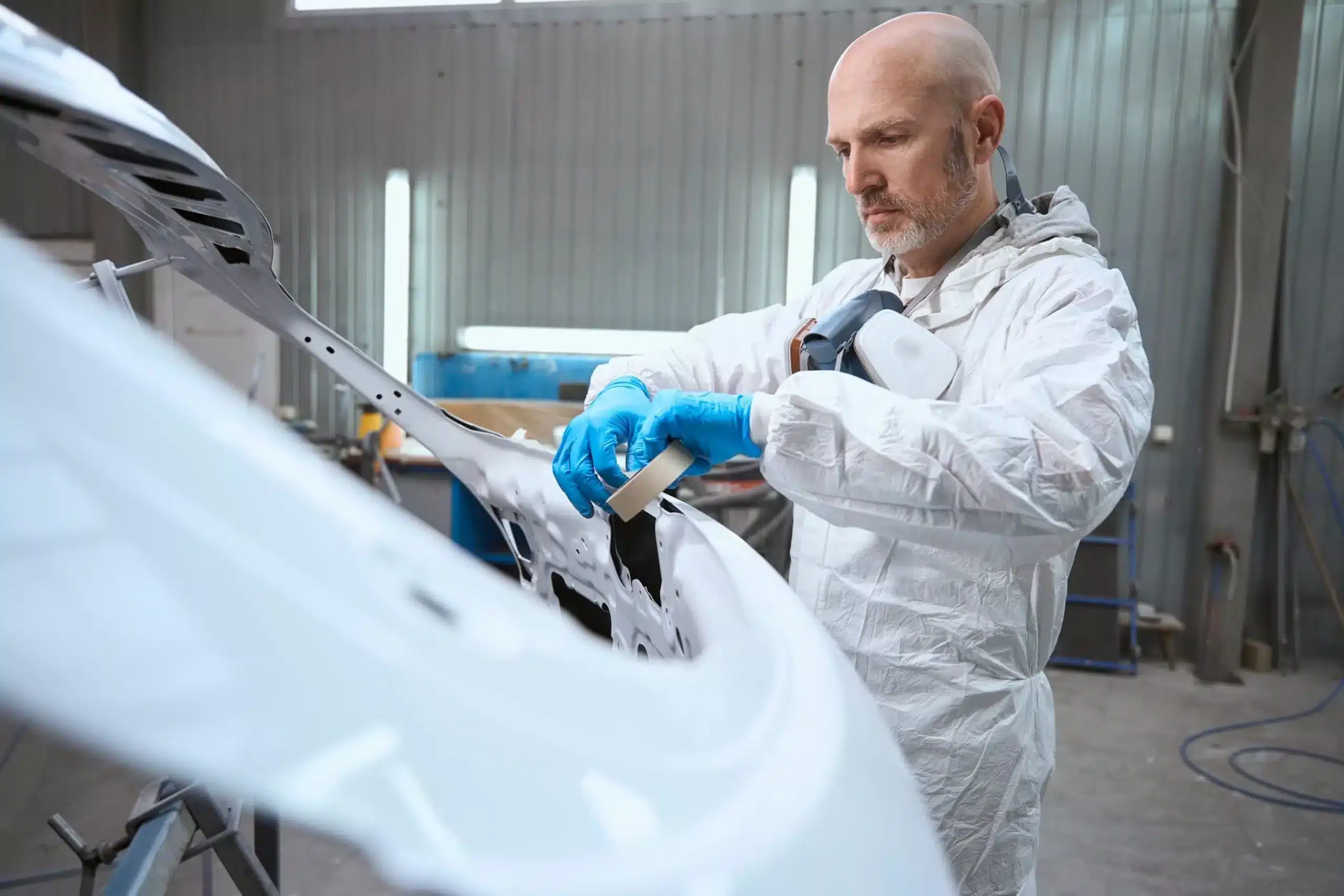
Lettering is as important as any other aspect of painting, but it isn’t something that every professional fully understands. From the automotive repair industry to the painting and decorating industry, lettering and the mechanisms which achieve it are crucial to becoming a well-rounded professional who can deliver high-quality work to customers.
To be able to provide the best quality work, professionals must ensure that they are able to carry out the job on a range of surfaces and materials, which is what we’ll break down in this blog.
Achieving professional results in custom lettering requires a blend of technical skill and the right materials. A slightly different approach will be needed depending on whether you’re only lettering using straight lines or incorporating curves. While straight lines offer a more structured, measurable workflow, curves demand a higher degree of flexibility and patience. In this section of our guide, we’ll explain how you can tackle these different methods to ensure a flawless, high-end finish on any project.
The first step is to prepare the surface and ensure the substrate is ready to be painted. This will usually involve carrying out any necessary surface repairs before priming, block sanding, and final sanding. The last thing to do is clean the surface using a high-quality degreaser, paying close attention to the area where the lettering will be to ensure it’s free of debris, dirt, or oily residues that could compromise tape adhesion.
Before you start painting the lettering, you’ll need to apply primer sealer and a few coats of base coat to the surface. This will act as a protective barrier if you need to remove any lettering and start again later down the line. This base layer also provides the smooth, consistent texture necessary for the masking tape to create a perfect seal. Allow this to dry fully before moving on.
Working with your customer’s requirements, you can then start to measure and map out the sizing and spacing for your lettering shapes. For straight lettering, this is often a matter of establishing a precise baseline and ensuring vertical symmetry across the design. Achieving straight lines is arguably easier than trying to perfect curved lettering, simply because you can easily measure everything and ensure your spacing is correct with less effort.
When mapping out curved designs, you must account for the natural flow of the surface. This might involve marking key pivot points or using a guide to ensure the radius of each letter remains consistent. This will be unique to the job and could involve mapping out fine line or thicker lettering, depending on what the customer wants and the part of the project you’re working on.
Once you’re happy with the mapped-out design, you can begin placing your masking tape down onto the surface. For straight sections, keeping the tape under slight, consistent tension while laying it down will help maintain a perfectly linear edge. When tackling curves, you should select a tape specifically designed for high flexibility. Rather than pulling the tape, which can cause it to lift later, you should carefully ‘feed’ the tape along the mapped curve to maintain its shape.
Using either a blade or a pair of scissors, cut each strip of tape needed according to the design. It is essential to ensure everything is pressed down firmly, especially at the overlapping points and edges, before starting the painting process, since this will prevent paint from bleeding into the edges of the tape.
After painting the lettering with your choice of specialist paint, you can carefully remove your fine line masking tape. For the sharpest results, remove the tape while the paint is still slightly ‘tack-dry’ to prevent the edges from cracking. This should then be sealed in with a clear coat or two to give it a professional finish and protect the area from environmental wear.
The demand for precision lettering spans various sectors, each requiring a high level of detail and a durable finish. Offering professional lettering services can significantly broaden your client base, moving beyond simple aesthetics into high-value, functional and commercial applications.
In the automotive and transport sectors, this includes everything from petrolheads wanting to add something unique to their car to motorbike enthusiasts asking for intricate lettering on their bikes or helmets. However, the applications extend far into the industrial world, where clear, permanent identification is essential. From heavy machinery branding and safety signage to architectural metalwork and marine vessel identification, the need for clean, painted typography is universal.
You might also find that commercial businesses seek out specialist masking for unique advertisement signs on their business vehicles, retail shopfronts, or bespoke interior branding.
Curious about which of our tapes is best suited for lettering? Discover the best JTAPE products to use below.
Whether you are working on bespoke signage or intricate vehicle branding, 120C Lime Precision Masking Tape is the ultimate tool for achieving sharp, professional results. As a translucent rice paper masking tape, it offers the visibility required for perfect alignment and overlapping, which is essential when laying out complex lettering designs.
This tape is engineered for high-performance environments, featuring a higher tack than other similar tapes. With its specialised acrylic adhesive, it’s best suited for highly protective bonds on sensitive surfaces and is heat resistant up to 120°C/248°F, making it ideal for multi-stage bake cycles. The ultra-thin profile of the washi paper ensures that even the most delicate letters have a flat, seamless appearance, as it can be removed with no adhesive residue. This ensures you achieve a clean, great-quality finish without paint bleeding under the tape, even when using solvent-based or water-based paint systems.

There are a number of other options for fine line masking tape, as below.
Orange Fine Line Masking Tape is thinner and more translucent than other options, ideal for vehicle contours and curves, allowing you to see through to the painted surface. Constructed from a stabilised PVC film, it offers excellent colour separation and leaves no adhesive residue, even after being exposed to temperatures up to 150°C/302°F.
Our Purple Translucent Fine Line Masking Tape is highly flexible, featuring a newly formulated transparent backing to allow for optimum precision during application. This tape is heat-resistant up to 130°C/266°F for up to 30 minutes, ensuring it remains stable during bake cycles.
Blue Fine Line Masking Tape is a medium flex tape that’s ideal for use across custom jobs as it can easily adhere to a wide range of surfaces. It is heat-resistant up to 150°C/302°F for 1 hour.
Our Olive+ Fine Line Masking Tape offers a higher level of rigidity while still remaining flexible enough. It is thinner than most of the other fine line tapes and has increased grab, reducing the chance of lifting.
Each of our Fine Line Masking Tapes is perfect for hand-painting straight and curved lines onto the surface of a vehicle. With a wide variety of tape widths available, you can easily find the specific size to ensure you find the one that’s right for your lettering job.

Created with ultimate flexibility in mind, our Customising Tape is split into eight 1.5mm strips so that you can easily apply even sections of tape. This unique PVC-backed solution is specifically engineered to conform to the tightest contours, making it the industry standard for masking complex curves on motorbike tanks, helmets, and bespoke vehicle bodywork.
The thermally stabilised carrier ensures the tape remains highly flexible without snapping, while the rubber-based adhesive provides a secure bond that can withstand temperatures up to 150°C/302°F for at least 30 minutes. It can also be handy to use when you need to peel out the central section of the lettering to create perfectly parallel stripes or negative-space typography with sharp, non-bleed edges. By removing specific 1.5mm sections, you can achieve a variety of custom stripe widths and decorative flourishes that would be nearly impossible to mask by hand, ensuring a clearly defined paint line every time.

To achieve a gallery-quality finish on any lettering project, the technique is just as vital as the tools. Use these professional tips to ensure your linework remains sharp and your designs perfectly symmetrical.
Fine line tapes are engineered to flex and contour, but pulling too hard can cause the tape to thin or lift over time. Let the tape do the work! Apply it with minimal tension to maintain a consistent width and prevent ‘creep’.
For complex characters, avoid attempting one continuous pull. Break each letter into individual strokes, overlapping your tape precisely where the lines meet. This method offers much greater control over the geometry of the font.
If a line isn’t sitting perfectly, know when to start a section over. It is far more efficient to re-mask a single stroke now than to face a costly and time-consuming correction once the paint has been applied.
Removal is just as important as application. For the crispest edge, pull the tape back on itself at a 45-degree angle while the paint is still slightly tacky. This prevents the paint film from tearing and ensures a smooth, professional transition.
–
There’s no doubt that custom lettering requires a combination of patience, skill, and the right equipment. We hope this guide provides you with a useful resource to help you perfect your specialist painting techniques. Beyond our industry-leading fine line tapes, the complete JTAPE range is designed to meet the rigorous demands of professional finishing. Whether you require high-tack precision paper, versatile masking solutions, or specialist customising tapes, we provide the tools necessary to achieve a “right-first-time” finish.
To learn more about our range of tapes and find the perfect match for your next project, explore our Product Categories page.